Build a Workout Routine You’ll Actually Stick With
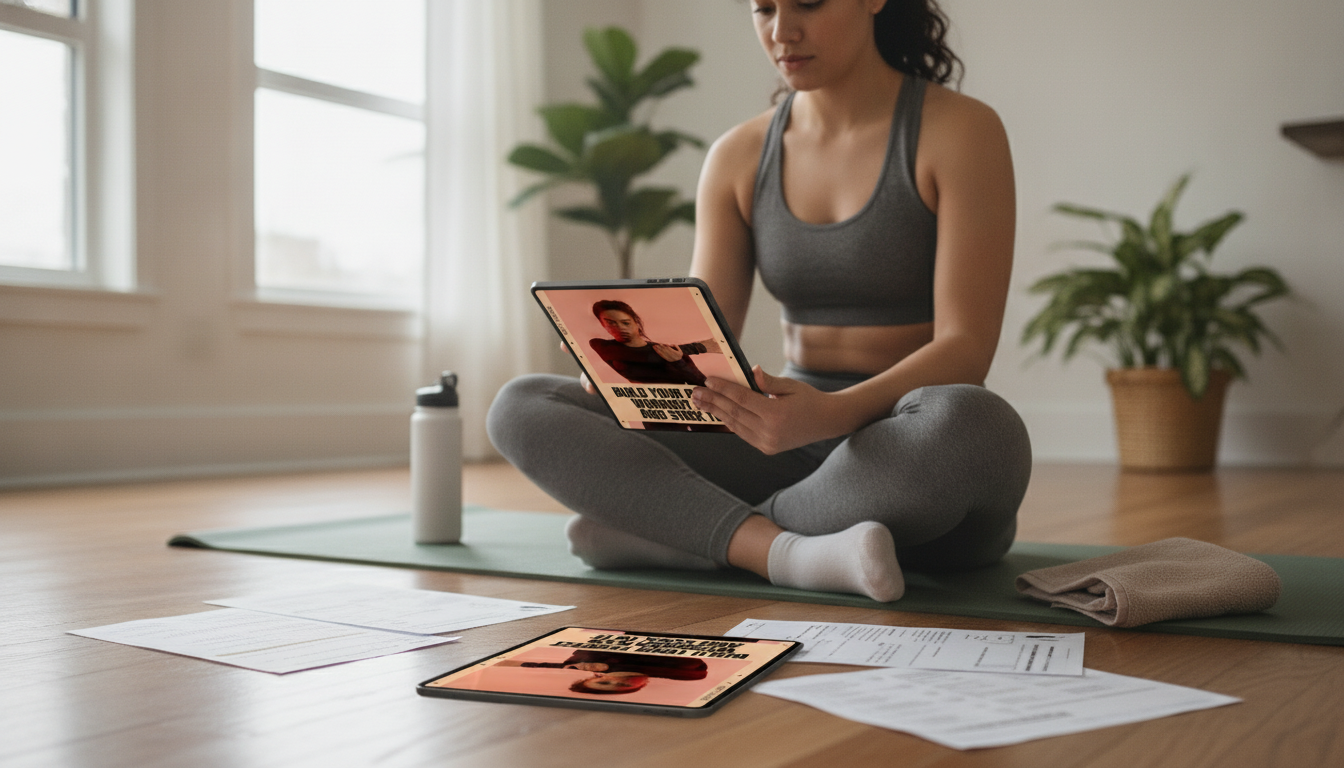
Build Your Perfect Workout Plan and Stick to It
A workout plan only works if it fits real life: your schedule, recovery capacity, preferences, and goals. The most effective routines are simple to repeat, progressive enough to drive results, and flexible enough to survive travel, busy weeks, and low-motivation days. Use the steps below to build a routine that covers strength, cardio, mobility, and recovery—then set up a system that makes consistency the default.
Start with clear goals and a realistic baseline
Before choosing exercises, get specific about what “success” looks like for the next 8–12 weeks. One focused priority keeps your plan clean and prevents the “do everything” trap.
- Pick one primary goal (fat loss, muscle gain, strength, endurance, general fitness). Keep secondary goals in mind, but don’t let them hijack your main target.
- Set your baseline: current weekly activity, average steps, typical sleep, available training days, equipment access, and any movement limitations.
- Choose 1–3 measurable markers: a few key lifts (a squat pattern and press pattern), a time/distance metric, a waist/hip measurement, or simple adherence (sessions completed).
- Define your minimum effective plan: the smallest routine that still moves the needle—your “busy-week default” that protects consistency.
If decision fatigue is your biggest barrier, a guided structure can help you start quickly and refine later. The downloadable guide Build Your Perfect Workout Plan and Stick to It – A Practical Guide on how to build a workout routine for Lasting Results is a practical option when you want a clear template without overcomplicating the basics.
Choose a weekly structure that matches your schedule
Training frequency is a logistics decision first and a fitness decision second. The “best” split is the one you can repeat for months.
- Decide frequency first: 2, 3, 4, or 5 days per week. Consistency beats an ideal plan that rarely happens.
- Use anchor days: pick fixed days/times that seldom move (example: Mon/Wed/Fri). Make extra sessions optional, not required.
- Balance stress: avoid stacking your toughest days back-to-back if sleep, work, or parenting demands are high.
- Plan a fallback workout: a 20–30 minute version you can plug in anywhere when life hits.
| Days/Week | Strength Focus | Cardio & Conditioning | Best For |
|---|---|---|---|
| 2 | 2 full-body sessions | 2–3 short walks or 1 easy bike/row | Busy schedules, beginners, maintenance |
| 3 | 3 full-body sessions or Upper/Lower/Full | 1–2 cardio sessions (easy/moderate) | Most people seeking lasting results |
| 4 | Upper/Lower split (2+2) or Full-body + accessories | 1–2 cardio sessions (mix easy + intervals) | Hypertrophy or strength with structure |
| 5 | 3 strength + 2 accessory/skill days | 2 cardio sessions (one easy, one harder) | Advanced trainees with strong recovery habits |
Build each workout with a simple, repeatable format
A repeatable session flow makes it easier to show up even when motivation is low. Aim for a structure that you can run on autopilot.
- Warm-up (5–8 minutes): raise body temperature, then add 2–3 prep drills that match the day’s lifts (hips, shoulders, ankles).
- Main lift (10–20 minutes): one primary movement pattern (squat, hinge, push, pull, carry). Keep it consistent for several weeks.
- Assistance work (15–25 minutes): 2–4 exercises for weak links and balanced development (glutes/hamstrings, upper back, core).
- Conditioning finisher (optional 5–12 minutes): short circuits, incline walking, or intervals—only if recovery stays solid.
- Cool-down (2–5 minutes): gentle breathing, light mobility, and quick notes for next time.
Cover the essentials: movement patterns and weekly volume
Most effective plans are “boring” on purpose: they repeat the essentials and progress them gradually.
- Train these patterns weekly: squat, hinge, horizontal push, vertical push, horizontal pull, vertical pull, carry, and anti-rotation core.
- Strength and muscle starting point: 6–12 challenging sets per muscle group per week, then adjust based on soreness, performance, and available time.
- General health foundation: combine strength training with moderate cardio and daily low-intensity movement (walking is an underrated amplifier).
- Keep selection stable early on: repeating key lifts builds skill and makes progress easier to measure.
For general activity targets, reliable references like the CDC adult physical activity guidelines and the WHO physical activity factsheet provide a helpful “big picture” baseline.
Progress without burning out
Progress is a long game. The goal is to improve while keeping your joints, sleep, and motivation intact.
Make consistency automatic: cues, friction, and rewards
Nutrition and meal consistency often make training consistency easier. If kitchen chaos is slowing you down, A Simple System for an Organized Pantry – 10 in 1 Bundle of Guides, eBooks & Checklists can help simplify the “what do I eat today?” problem that derails many routines.
A practical guide to put it all together
Clothes that fit and move well can reduce workout friction more than most people expect. If you’re rebuilding your routine and want outfits that feel confident and functional, Shape-Savvy Style for Triangle Figures: The Ultimate Guide to Dressing Your Triangle Body Shape can help streamline what you wear so getting out the door takes less effort.
FAQ
How long should a workout routine last before changing it?
Keep the core routine for 8–12 weeks so you can build skill, measure progress, and avoid constant resets. Change sooner only for pain, boredom that threatens adherence, or a clear plateau despite solid sleep and nutrition.
What is the minimum amount of exercise to see results?
For many goals, 2–3 strength sessions per week plus regular walking is enough to drive noticeable improvements. Results scale fastest when sessions are consistent and progressions are small but steady.
How do workouts stay effective when time is limited?
Use full-body sessions, prioritize one main lift and 2–3 assistance moves, and keep a 20–30 minute fallback version ready for busy days. Shorter workouts work best when they’re focused and repeatable.










Leave a comment