71-Inch Wooden Dog Crate: 3 Rooms + Storage Drawers
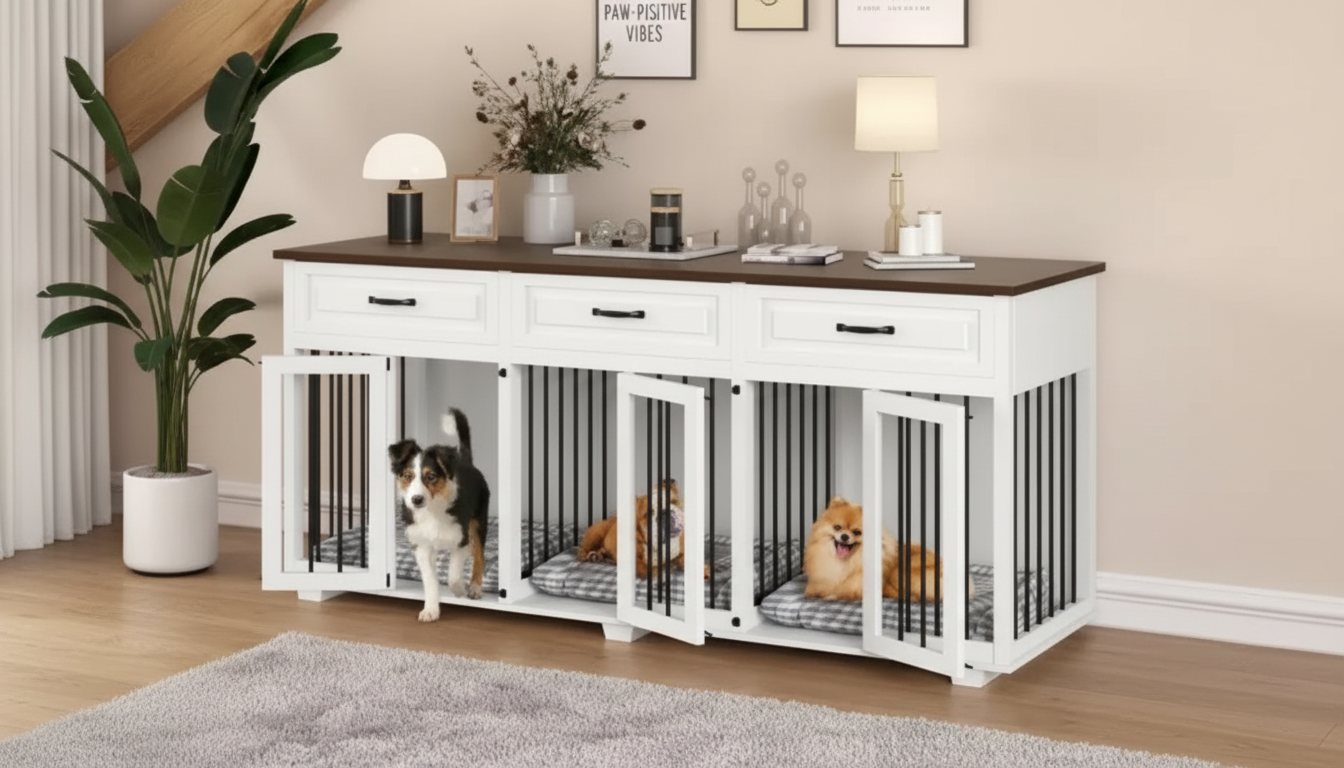
71″ Wooden Dog Crate with Drawers and 3 Rooms: Dog-Safe Comfort Meets Real Home Organization
A furniture-style dog crate can solve two everyday problems at once: giving dogs a calm, defined space while keeping the home looking pulled together. This 71-inch wooden crate pairs three separate rooms with built-in drawers, creating a tidy station for bedding, leashes, treats, and daily essentials—without the look of a traditional wire kennel. When it’s sized correctly and introduced with positive conditioning, it can become a consistent “settle spot” that supports routines and reduces the scattered-pet-supplies vibe in busy households. For more guidance, see 10 Best Furniture & Wooden Dog Crates That Blend In To Your Home.
What Makes a Furniture-Style Crate Different
Unlike a standard wire kennel that reads as pet gear first, a furniture-style crate is meant to live out in the open—often in living rooms, great rooms, or open-concept layouts—without visually taking over the space.
- It blends into common areas more like a sideboard or console than a temporary containment tool.
- It reduces visual clutter by consolidating supplies inside drawers instead of leaving baskets and bins on the floor.
- It provides a den-like resting spot while keeping airflow and visibility more open than fully enclosed dog houses.
- It can function as dual-purpose furniture (top surface for decor) when used within the product’s stated weight limits and use guidelines.
For crate-training fundamentals and best practices, see guidance from the American Kennel Club and the ASPCA.
Three Rooms: When Multi-Dog Layouts Make Sense
A three-compartment layout is especially practical for multi-dog homes or for single-dog homes that want separate “zones” (resting, quiet time, and a rotating decompression option).
- Separate rooms support multiple small-to-medium dogs, dogs that prefer personal space, or a structured routine where each dog has a designated area.
- It can help manage feeding routines, short decompression breaks, or brief separation—while keeping everyone in the same room with the family.
- Individual resting zones can reduce resource-guarding triggers around a shared bed or shared corner.
- Temperament comes first: dogs that get barrier-reactive may do better with greater distance, a different room arrangement, or alternative placement.
In practice, the biggest win is predictability: each dog learns where to go when it’s time to settle, and people aren’t constantly rearranging gates or moving crates between rooms.
Built-In Drawers: A Clean Setup for Daily Essentials
One of the most useful differences in this style of crate is storage that’s built into the same footprint. Drawers make it easier to keep routines consistent, because the tools for those routines are right where they’re needed.
- Store leashes, waste bags, grooming wipes, and treats in one dedicated spot near the crate.
- Keep training consistent by having rewards and enrichment items handy for “go to your room” and “quiet settle” moments.
- Separate dog items from kitchen or entryway storage for better organization and hygiene.
- Choose drawer contents with curiosity in mind: avoid loose medications, chocolate, sharp tools, or anything a nosy dog could snag if a drawer is left open.
If your household runs on checklists, you can even treat the drawers like a mini “dog station” with a reset habit: restock bags, wipe down surfaces, and rotate treats weekly so things don’t get stale or messy.
Sizing and Fit: Getting Comfort and Safety Right
Quick Fit Checklist for Multi-Room Wooden Crates
| What to check | Why it matters | Practical tip |
|---|---|---|
| Internal room dimensions | Prevents cramped posture and stress | Compare to dog length/height; allow room to turn comfortably |
| Door openings and latch style | Reduces escape risk and pinching hazards | Confirm smooth operation; re-check tightness after assembly |
| Ventilation and visibility | Supports calmer rest and temperature comfort | Avoid placing against heating vents or in direct sun |
| Flooring and bedding | Improves joint comfort and traction | Use a non-slip pad plus a washable mat sized per room |
| Placement in the home | Affects anxiety, barking, and sleep quality | Pick a quiet corner with foot-traffic visibility but not in a main pathway |
Assembly, Placement, and Daily Use
Design Details That Keep the Space Looking Intentional
If the goal is a tidy home overall, pairing the crate’s drawers with a broader organizing system can help routines stick. For households that enjoy structured checklists and reset routines, A Simple System for an Organized Pantry – 10 in 1 Bundle of Guides, eBooks & Checklists can complement the same “everything has a place” approach—just in a different part of the home.
Product Snapshot: 71″ Wooden Dog Crate with Drawers and 3 Rooms
For a streamlined, furniture-forward setup, 71″ Wooden Dog Crate with Drawers and 3 Rooms – Stylish Dog House Furniture is designed to function as both a dog resting space and an organization piece.
FAQ
Can two or three dogs use the same multi-room crate safely?
Yes, when each dog has its own compartment that fits properly and the dogs are comfortable resting near each other. Supervise early use, avoid forcing dogs into close quarters, and separate dogs that show guarding, barrier reactivity, or stress signals.
How should a wooden dog crate be cleaned and deodorized?
Wipe surfaces routinely with a pet-safe cleaner and dry promptly to protect the finish. Wash removable soft items regularly, and address odors early with gentle cleaning rather than harsh chemicals that can damage wood or leave strong fumes.
Is a furniture-style crate suitable for dogs that chew?
It can work for mild chewers with training, enrichment, and supervised acclimation, especially if chewing is redirected to appropriate items. Persistent, heavy chewers may need a more chew-resistant containment option until the behavior is reliably managed.









Leave a comment