Kids Help Plan a Cozy Family Dinner: Roles & Checklist
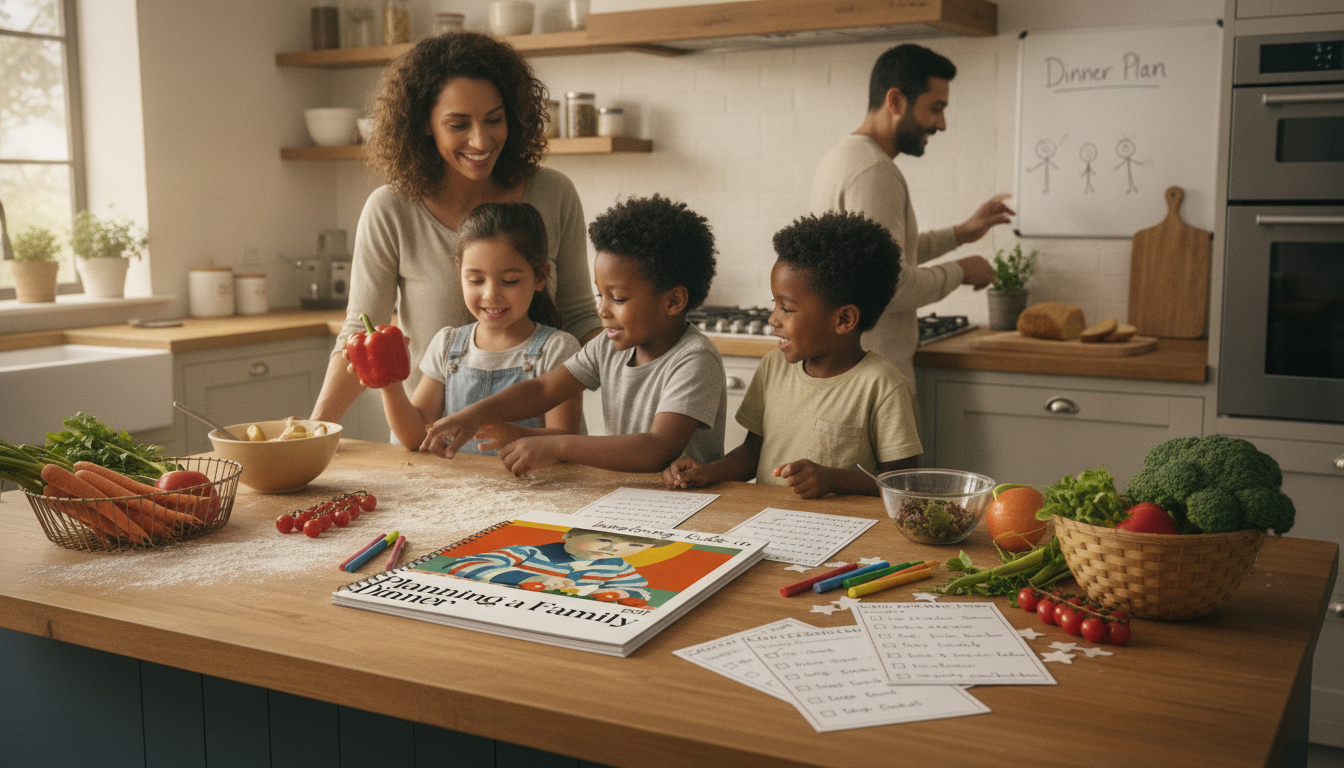
Involving Kids in Planning a Cozy Family Dinner: A Simple, Kid-Friendly System
A cozy family dinner becomes easier (and more meaningful) when kids help plan it. With a few clear choices, age-appropriate roles, and a predictable routine, children can contribute without turning dinner prep into a power struggle. The goal isn’t a perfect meal—it’s a repeatable rhythm that helps everyone arrive at the table calmer, more connected, and more willing to try what’s served.
Why kids thrive when they help plan dinner
When children participate in dinner planning, they’re not just “helping”—they’re practicing life skills and building buy-in for the meal.
- Shared planning builds ownership: kids are more likely to try foods they helped choose, wash, or serve.
- Dinner becomes skills practice: reading, counting, measuring, timing, and basic kitchen safety can fit naturally into prep.
- Cozy routines reduce friction: predictable steps (choose → shop → prep → eat → reset) reduce decision fatigue for everyone.
- Connection improves when roles are clear: one small job per child prevents crowding and keeps expectations realistic.
Set the tone: the “cozy dinner” basics that don’t require perfection
Cozy doesn’t have to mean elaborate. It means consistent cues that signal: “We’re shifting into dinner mode.”
- Choose one anchor habit: a battery candle, a favorite playlist, or a quick “one good thing” question.
- Aim for a calm start: five minutes of “kitchen opening” (wash hands, clear counters, set tools) helps kids transition.
- Keep the plan visible: post the menu, roles, and a short timeline where everyone can see it.
- Use a consistent closing: a fast table reset plus a predictable after-dinner activity (walk, game, story) reinforces the routine.
Kid-friendly planning roles by age (so it stays fun)
Assign roles by safety and attention span—not by a child’s “helpfulness mood” that day. If the job is small enough, it’s easier to start.
- Ages 2–4: choose between two options (two veggies, two sides), rinse produce with help, place napkins, stir cold ingredients.
- Ages 5–7: help make a simple list with pictures/words, measure dry ingredients, tear lettuce, set utensils, help with the timer.
- Ages 8–10: follow a short recipe, prep a no-cook side, peel (with safe tools), grate with supervision, mix sauces, portion toppings.
- Ages 11–13+: cook one component start-to-finish with supervision, manage a stove/oven timeline, double-check doneness cues.
- Any age: the “table host” role—greeting everyone, choosing a question, and serving water—builds confidence and connection.
A simple planning flow: pick, balance, and commit
The smoothest family dinners usually follow the same pattern: limited choices, a basic nutrition template, and a clear “this is the plan” moment.
- Start with a short family vote: offer 2–3 main options and let kids pick (rotate whose vote breaks ties).
- Use an easy plate balance: include a protein, a colorful fruit/veg, and a comforting carb; keep a “safe food” on the table.
- Decide on one new or “learning” item at most: keep novelty small to avoid overwhelm.
- Commit with a written plan: menu + roles + start time; once it’s posted, skip repeated renegotiation.
If you want a quick reference for “balanced enough,” helpful starting points include USDA MyPlate and the Harvard Healthy Eating Plate.
Cozy Family Dinner Planning Checklist (Printable-Style)
| Step | Kid Job Ideas | Adult Support | Done |
|---|---|---|---|
| Choose the menu (10 min) | Vote between 2–3 mains; pick one veggie and one “fun” element (dip, topping, dessert) | Limit choices; confirm allergies; write final menu | ☐ |
| Make the list (5–10 min) | Circle pantry items; draw missing items; count how many servings | Check staples; set a budget; add one backup option | ☐ |
| Prep stations (5 min) | Wash hands; set napkins/utensils; fill water cups | Set safe tools; clear counter space; assign zones | ☐ |
| Cook together (20–40 min) | Stir, measure, assemble, set timer, plate sides | Handle heat/sharp steps; guide sequencing | ☐ |
| Set the cozy cue (2 min) | Choose playlist/question; light battery candle; arrange simple centerpiece | Keep it short; start on time | ☐ |
| Reset (5–10 min) | Clear plates; wipe table; load utensils; pack leftovers label | Finish knives/heat cleanup; quick sink reset | ☐ |
Make picky eating less stressful without battles
Many mealtime blow-ups come from pressure, not the food itself. A calm structure helps kids feel safe enough to explore.
For more nutrition guidance geared to families and kids, HealthyChildren.org (American Academy of Pediatrics) is a reliable resource.
Cozy dinner ideas kids can help assemble
Keep it sustainable: scripts, boundaries, and time savers
A ready-to-use toolkit for family dinner planning
- For a fridge-friendly routine with roles by age and a repeatable checklist, see the Involving Kids in Planning a Cozy Family Dinner | Family Dinner Guide eBook | Kid-Friendly Planning Checklist & Printable Toolkit.
- If the biggest slowdown is finding ingredients and keeping staples visible, the A Simple System for an Organized Pantry – 10 in 1 Bundle of Guides, eBooks & Checklists can help streamline shopping and weeknight prep.
FAQ
How do children help with dinner planning without slowing everything down?
Limit choices to two options, assign one small role per child, and use a short timer for each step. Keep heat and knife tasks with adults so the workflow stays steady.
What if kids choose meals that aren’t very balanced?
Use a simple template—protein plus a colorful fruit/veg plus a comfort carb—then let kids pick within each category. Keeping one “safe food” on the table supports flexibility without turning dinner into a negotiation.
How can dinner feel cozy on busy weeknights?
Pick one fast cue (playlist, battery candle, or a table question), keep the menu simple, and lean on repeatable formats like bowls, sheet-pan meals, or breakfast-for-dinner. Consistency creates the cozy feeling more than extra effort does.












Leave a comment