Terrarium Guide: Build Thriving Open or Closed Ecosystems
Terrariums, Explained: What Makes a Mini Ecosystem Thrive
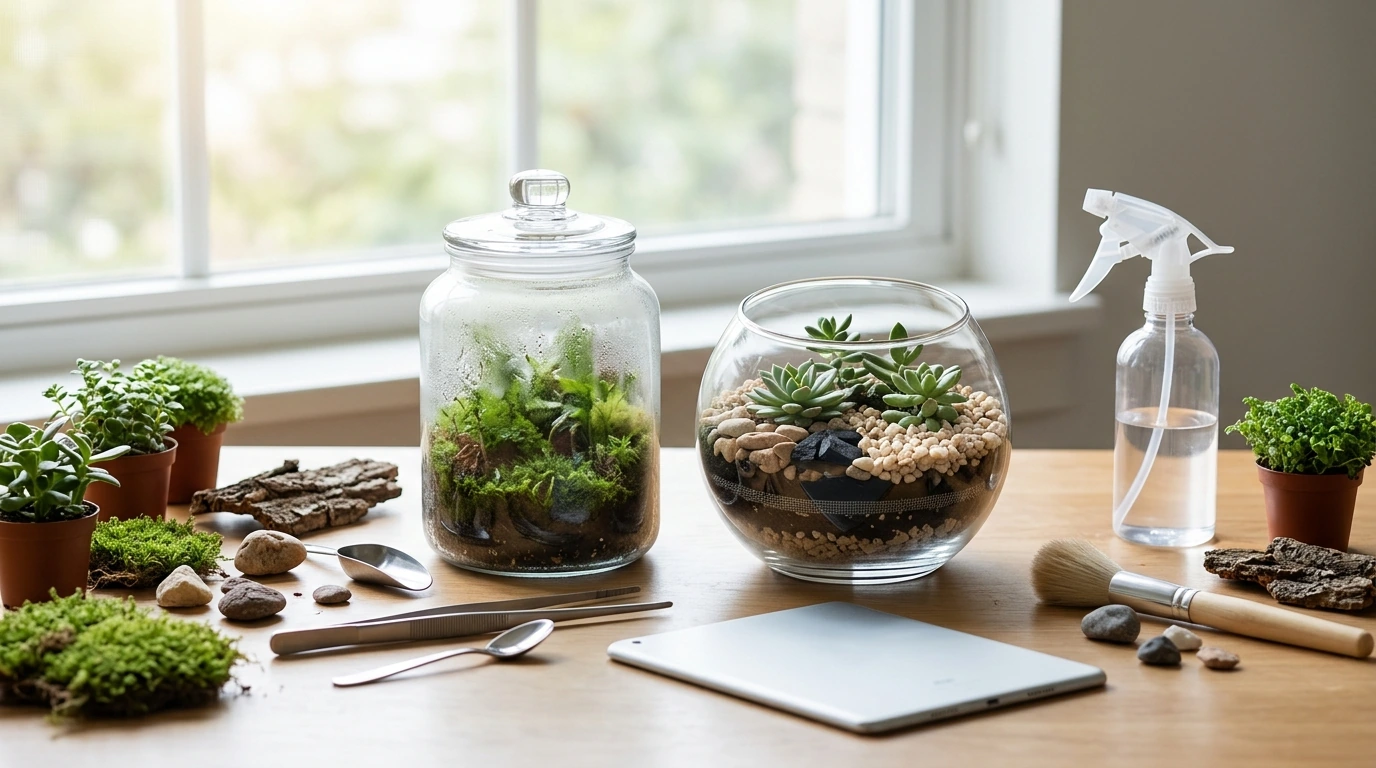
Terrariums turn plant care into a living design project: part horticulture, part miniature landscape. The best builds feel effortless, but they’re actually a careful balance of moisture, airflow, light, and plant choice—matched to the right container. Whether you’re aiming for a misty forest in a sealed jar or a crisp desert scene in an open bowl, the fundamentals stay the same: smart layering, stable structure, and a maintenance rhythm that prevents rot, mold, and overcrowding.
If you want a printable, build-along reference for both open and closed styles, The Art of Building Terrariums (digital download) is designed to be kept on hand while you work—so the steps and design prompts stay easy to follow.
What Makes a Terrarium Work
A terrarium succeeds when the container type supports the plants you’ve chosen. Closed terrariums hold humidity and recycle moisture, which is great for tropical, moisture-loving species—but they can also trap too much water if you over-mist. Open terrariums breathe, dry faster, and make it easier to keep succulents and other drier plants healthy.
Scale and stability matter just as much as plant care. Compact plants reduce crowding, lightweight décor prevents collapse, and a solid base helps keep the substrate from shifting over time. A clean layout with intentional negative space often lasts longer than an overfilled “instant jungle.”
Tools and Materials Checklist
Gather your materials before you start so you can build in one smooth sequence:
- Container: glass jar, bowl, cloche, or geometric vessel—choose based on humidity needs and access for pruning.
- Drainage layer: small stones, lava rock, or LECA to buffer extra water in containers without holes.
- Barrier layer: mesh or landscaping fabric to keep soil from sifting into the drainage layer.
- Substrate: a terrarium-appropriate mix (often coco/peat + perlite + a touch of charcoal), matched to your plants.
- Activated charcoal: helps keep enclosed setups fresher and reduces odors.
- Hardscape and accents: stones, bark, wood, mini figurines (optional), and sheet moss for finishing.
- Tools: long tweezers, small scoop or funnel, soft brush, spray bottle, and microfiber cloth for glass cleanup.
Quick Guide to Containers and Plant Matches
| Terrarium type | Best for | Typical plants | Moisture approach |
|---|---|---|---|
| Closed (lid or stopper) | Humidity-loving microclimates | Fittonia, fern, moss, selaginella | Light misting; watch condensation |
| Open (wide mouth) | Drier airflow-friendly builds | Succulents, small cacti, air plants (dry), peperomia (some) | Water sparingly; let substrate dry more |
| Partially covered (cloche/vented) | Balanced display with easier access | Mixed small tropicals, moss accents | Moderate watering; adjust by season |
Step-by-Step Build Sequence
Use this sequence to keep layers clean, plants stable, and the design easy to refine as you go:
- Clean and prep: wash the container, dry fully, and plan the layout back-to-front for visual depth.
- Add drainage: pour a stable base (about 1–2 cm for small jars; deeper for large vessels).
- Add charcoal: sprinkle a thin layer—especially helpful in closed terrariums.
- Add barrier: place mesh/fabric so the substrate stays separate from the drainage layer.
- Add substrate: slope soil slightly higher in back to create perspective and planting zones.
- Place hardscape: anchor stones/wood first and press gently so they don’t shift later.
- Planting: make small holes, loosen compact roots, and plant from largest to smallest.
- Top dress: add moss, gravel, or leaf litter to finish and reduce soil splash.
- Watering: mist or lightly water at the plant base; avoid drenching (especially sealed jars).
- Clean glass: brush away soil and wipe the inside for a crisp, gallery-like look.
Creative Terrarium Building Ideas (Design Prompts)
Once you’ve mastered the layers, design becomes the fun part. Try one of these prompts to move beyond a basic “plants in a jar” look:
Placement and Light: Getting the Conditions Right
For low-light rooms, a small grow light on a consistent schedule can help. Keep the lamp far enough away to avoid heat buildup—especially over closed glass. For general plant and terrarium guidance, reference reputable resources like the Royal Horticultural Society (RHS) and the Missouri Botanical Garden.
Care and Maintenance Routine
Common Mistakes and Fast Fixes
Digital Download: What’s Included and How It Helps
If you plan to build more than one terrarium (or want a dependable reference while you work), The Art of Building Terrariums | Step-by-Step Guide with Creative Terrarium Building Ideas | Digital Download includes a clear build flow for open and closed styles, creative layout prompts, and a repeatable framework for choosing containers, layering materials, and maintaining long-term health.
For keeping supplies tidy—substrate components, tools, stones, and spare containers—an organized storage routine makes building sessions faster and cleaner. A Simple System for an Organized Pantry – 10 in 1 Bundle of Guides, eBooks & Checklists can also double as a practical approach for organizing your crafting-and-gardening shelf.
FAQ
How often should a closed terrarium be watered?
Much less often than most houseplants. Use condensation as your guide: light fog that clears is normal, but constant heavy droplets usually mean you should stop watering and briefly vent the lid.
Do terrariums need a drainage layer if the container has no holes?
A drainage layer is strongly recommended because it helps buffer extra moisture away from roots. Pair it with a barrier layer so the soil doesn’t mix down and stay soggy.
What plants are easiest for a first terrarium?
For closed terrariums, fittonia, small ferns, and moss are beginner-friendly because they enjoy humidity. For open terrariums, choose small succulents in a gritty mix and keep watering minimal.











Leave a comment