47-Piece Electrical Lockout/Tagout Kit for Safe Maintenance
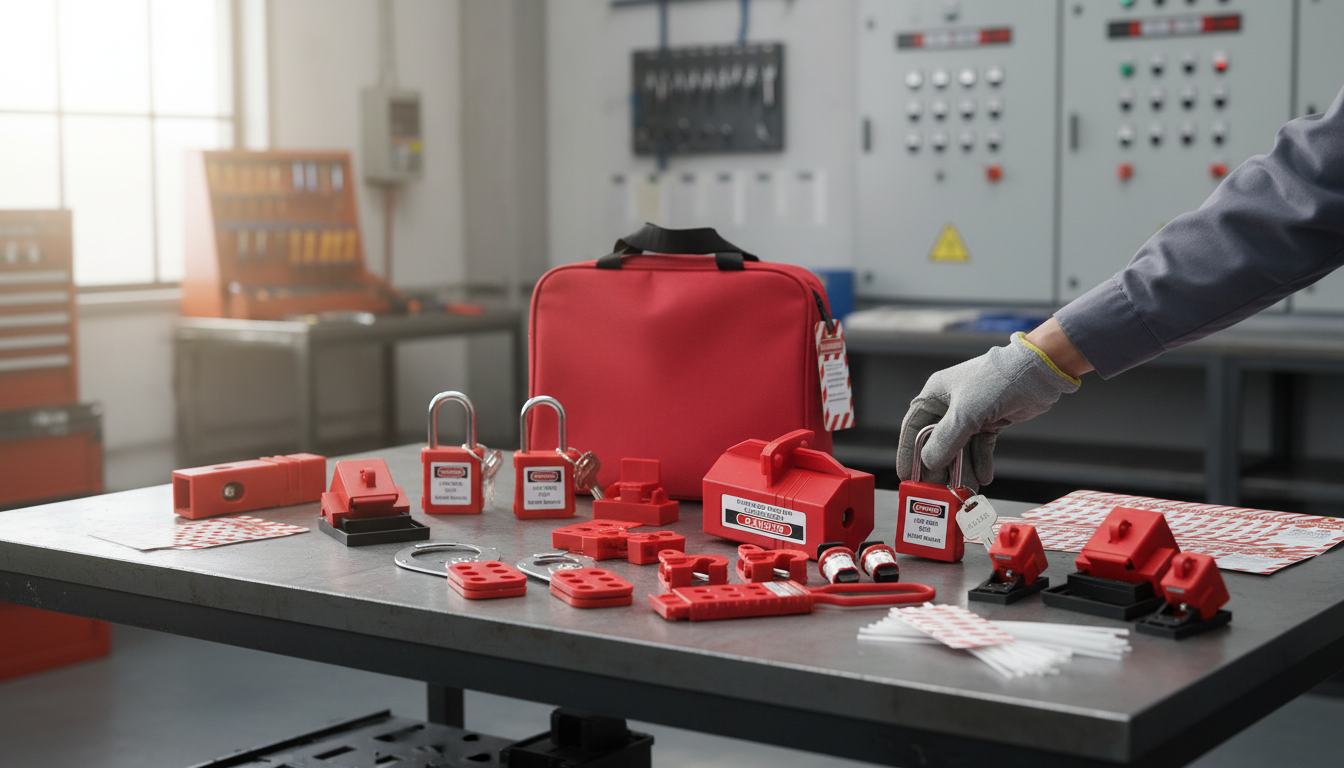
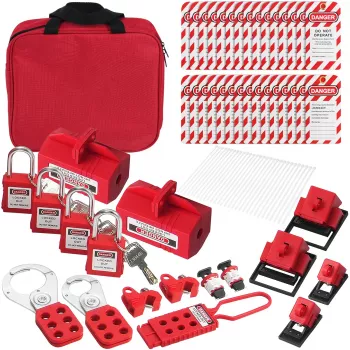
Electrical Lockout Tagout Kit – 47-Piece Complete Safety Set
A complete electrical lockout/tagout (LOTO) kit helps reduce accidental energization during maintenance by keeping breakers, switches, and plugs secured and clearly labeled. This 47-piece set is designed for quick deployment across common electrical isolation points, with a mix of lockout devices and identification components that support safer work practices on panels, equipment, and cords.
For teams building a consistent approach to hazardous energy control, an all-in-one kit also makes it easier to keep devices together, issue them to authorized employees, and demonstrate readiness during inspections aligned with programs informed by OSHA 29 CFR 1910.147 and guidance such as NIOSH lockout/tagout resources.
What’s included in a 47-piece electrical lockout/tagout set
The core purpose of an electrical LOTO kit is twofold: (1) isolate electrical energy so equipment cannot be re-energized while work is being performed, and (2) clearly communicate “do not operate” status so everyone on site understands the equipment is under control.
Most 47-piece assortments include multiple circuit breaker lockouts, at least one plug lockout option, lockout hasps for multi-person work, safety padlocks, and tagout supplies—typically packaged in a carry case or pouch (exact contents vary by model). The assortment matters because real-world electrical panels often contain mixed breaker types and widths; a single lockout geometry rarely covers everything. Identification components matter just as much: durable, readable tags and labels reduce confusion during shift changes, contractor handoffs, and troubleshooting.
Typical components and where they’re used
| Component type | Typical use case | What to check before use |
|---|---|---|
| Circuit breaker lockout | Secures a breaker in the OFF position on a panel | Compatibility with breaker style/width; firm clamping; does not interfere with adjacent breakers |
| Plug lockout | Prevents a plug from being inserted into an outlet | Fits plug size; enclosure closes fully; cord exits without pinching |
| Lockout hasp | Allows multiple workers to apply individual locks | Jaw capacity; smooth hinge; adequate clearance for locks |
| Safety padlocks | Personal lock to control access to the energy-isolated state | Key control; durable body; clear labeling capability |
| Tags (tagout) | Communicates status, owner, and timing of the lockout | Writable surface; attachment strength; visibility and language requirements |
| Carry case | Organizes devices for quick response and audits | Compartments; durability; easy transport to job site |
Where this kit fits in day-to-day maintenance work
Electrical LOTO is rarely limited to one “big shutdown.” The most frequent applications happen in small, repeatable tasks where a consistent kit prevents shortcuts and delays:
- Electrical panels: isolating individual branch circuits during troubleshooting, contactor replacement, or control component work.
- Equipment servicing: securing disconnects, switches, or control power feeding machinery so an unexpected start can’t occur.
- Cord-and-plug equipment: locking out portable tools, pumps, or appliances during repair so the plug can’t be reinserted.
- Multi-person jobs: using hasps so each authorized employee maintains their own lock control—no one relies on someone else’s key.
- Training and standardization: a shared kit supports repeatable procedures, onboarding, and consistent device selection across shifts.
When devices are kept together and ready to go, it’s easier to follow a structured process that aligns with electrical safety practices described in standards like NFPA 70E (particularly around shock risk, verification, and qualified-person responsibilities).
Practical checklist for using electrical lockout/tagout devices correctly
A kit is only effective when paired with consistent steps. The sequence below reflects common program elements used to control hazardous energy:
- Preparation: identify all energy sources (main, control, backup, stored energy) and notify affected employees.
- Shutdown: stop equipment using normal procedures before isolating energy.
- Isolation: open disconnects/breakers; remove plugs; verify the correct circuit/device is selected.
- Lockout: apply the correct lockout device and personal lock(s); add a legible tag with owner and status details.
- Verification: test for absence of voltage using an appropriate meter and method (live-dead-live where applicable).
- Control of keys: keep keys in the possession of the lock owner; avoid shared keys unless the program explicitly allows controlled access.
- Return to service: inspect area, remove tools, ensure guards are in place, clear personnel, remove locks per procedure, then re-energize.
In practice, the “verification” step is where time pressure can create risk. A well-stocked kit supports the earlier steps (isolation and control), but electrical testing still requires the correct training, PPE, and tools for the task.
Choosing the right electrical lockout devices for your panels and plugs
Even with a broad assortment, compatibility checks prevent onsite surprises. Before standardizing a kit across a facility, it helps to compare it against the actual isolation points encountered in routine work:
Care, inspection, and replacement habits that keep a kit reliable
Shop in-stock items
- Electrical Lockout Tagout Kit – 47-Piece Complete Safety Set ($40.97)
- A Simple System for an Organized Pantry – 10 in 1 Bundle of Guides, eBooks & Checklists ($435.99)
FAQ
What’s the difference between lockout and tagout?
Lockout uses a physical device and lock to prevent operation (for example, keeping a breaker handle secured in the OFF position). Tagout is a warning/identification method that communicates status and ownership; many programs require lockout whenever a physical lock can be applied.
How many locks are needed for a lockout/tagout job?
A common rule is one personal lock per authorized employee involved, so each person controls their own protection. Additional locks or hasps may be used for group work depending on the site’s lockout procedure.
How is absence of voltage verified after applying lockout?
Verification is performed with an appropriate electrical tester by a qualified person following site rules, often using a live-dead-live method: prove the meter on a known live source, test the isolated circuit, then recheck the meter on the known live source.











Leave a comment